Why do people talk in their sleep, and Can you reveal secrets while sleep talking?

In general, sleep talking is not very common, since it’s estimated that only five percent of adults are regularly affected by somniloquy. Children talk much more often in their sleep. As they get older, however, the phenomenon usually resolves itself. 

Woman sleeping in bed
Photo: Pixabay.com...

It is very rare that we speak clear words or even entire sentences in our sleep, since the speech muscles are actually completely relaxed during sleep. This is why we tend to utter incomprehensible scraps of words or individual sounds when we sleep. 

Thus revealing secrets from someone who talks in their sleep is more of a popular film trick.

Why do people talk in their sleep?

Sleep-talking usually occurs during the dream phases. It can happen that people simply pronounce dreamed sentences aloud. But even when the different phases of sleep are changed, those affected sometimes experience the phenomenon of speaking while sleeping. What we tell in sleep does not necessarily have to correspond to the truth or reveal inner needs and long-kept secrets, but, like dreaming itself, is a processing of our everyday life. Exactly which scraps of words emerge and how much is mixed up with the dream cannot be assigned with absolute certainty.

There are some factors that actually make it more likely that you will speak while you sleep. These include:

  • Stress
  • Fever
  • Poor sleep
  • Certain drugs
  • Different diseases
  • Consumption of nicotine or alcohol

What can I do about sleep-talking?

Although sleep-talking does not have any negative consequences for our health, it could lead to problems if you talk more often in your sleep and your partner feels disturbed by it. Following tips can be helpful if you want to reduce or stop sleep-talking. 

  • Relax: Yoga helps your body and mind to shut down and relax before going to sleep.
  • Light meals: It’s recommended to eat light meals at least three hours before bed.
  • Stop smoking/drinking: alcohol, cigarettes and caffeine should be avoided in the evening because they can have a negative effect on sleep.
  • Establish a routine: bedtime rituals such as reading a few pages every evening or drinking a certain tea help your body to adjust for sleeping.

Why do people say "bless you" when you sneeze?

During the first wave of plagues in the 6th century, Pope Gregory the Great ordered that anyone who sneezed should be blessed immediately, as sneezing was often the first sign of plague infection. 

Soon "God bless you" became a custom for occasional sneezes and its still used today. 

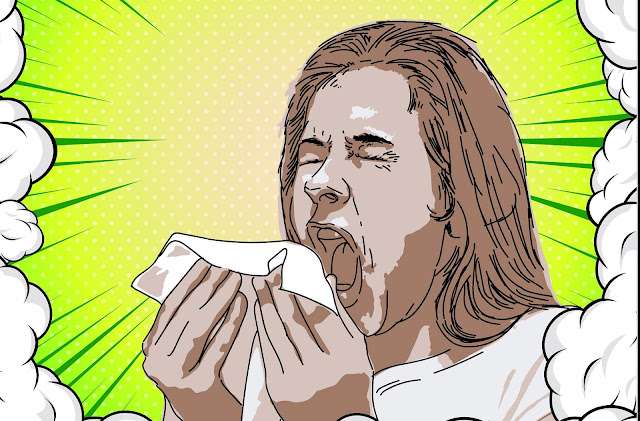
If we analyze the physiological process of sneezing, it stimulates sudden contraction of the exhalation muscles and thus the expulsion of nasal secretions as well as dust and foreign bodies through the nose and mouth. Due to the large number and high speed of the droplets emitted, possible infection can be spread to a distance up to five meters. 

So it's no wonder that we wish each other “good health”.

Drawing of a girl sneezing

Photo: Pixabay.com

Sneezing is a defense reaction against potentially harmful stimuli. Stopping the urge to sneeze is a bad idea for several reasons.

How to sneeze properly

The speed of a sneeze can easily match a hurricane. The suppression of sneezing can lead to increased pressure in the draining cerebral vein and thus in the head, similar to pressing. For this reason alone, suppressing sneezing is not recommended.

You should stop your nose when sneezing either. This builds up pressure and presses nasal secretions into the sinuses.

Until now, it was a good practice to hold your hand over your mouth when sneezing. But not only since the outbreak of the corona pandemic some say that this does more harm than good, since viruses spread quickly through the hands. 

Its recommended do sneeze in clean paper handkerchief held in front of your mouth, or the crook of the arm should only be used as the second option.


Why does your nose run when it's cold?

The human nose works a bit like thermostatic heater: when it gets cold, warm blood rushes through the nose. 

Cold triggers a stimulus similar to that of dust. The nose therefore also reacts with stuffiness. Cold reactions also fall under the responsibility of the nose, which has to fulfill a total of three tasks: filtering air, humidifying it and also warming it when it is cold.

This system is similar to thermostatic heating. When the air is cold, temperature sensors in the nose report an under-temperature to the brain. The control center then sends a heating command, and warm blood flows into the so-called turbinates that run through the inside of the nose. They swell and warm the air so that it doesn't reach the lower airways as icy. 

At the same time as the turbinates swell, the secretion production in the nose increases. The fluid, which is formed even under normal conditions to keep the mucous membranes moist, usually flow backwards - the nose "runs backwards" without you noticing it. In the case of high production and a swollen nose, this no longer works sufficiently, the nasal secretion flows forward - the nose runs.

The increased mucus production has an important function: It protects and cleans the nose. The nasal secretions prevent foreign particles from getting stuck in the nose. 

Why does your nose run when you cry?

The eyes and nose are connected by the tear duct. Even when we are not crying, the tear glands produce tear fluid all the time. They do this to keep the eyes moist and clean, but also to supply nutrients to the cornea. 

What runs out of the nose is tear fluid. 

Why does your nose run when you cry?

This tear fluid flows from the outside to the inside, which means that our lacrimal glands supply fluid to the eye. This liquid partially evaporates; on the other hand, it flows off inside, via the tear duct - and this duct ends in the nose.

Normally we do not notice this because only small amounts of fluid disappear there and these are lost, so to speak, in the expanses of the nasal mucous membranes. 

But when we cry we produce a large excess of tear fluid; the eye then has "high water": a part overflows - these are the tears that flow down the face; but larger amounts of tear fluid also flow away through the tear duct and come out of the nose as salty dripping wetness.

Why does alcohol make you drunk?

When we drink alcohol, some of it gets into the blood through the mucous membrane in the mouth. Then it goes on to the stomach, where another part is absorbed. The main intake of alcohol takes place in the small intestine. It is conducted into the blood via the mucous membranes there.

The blood carries alcohol throughout the body. The concentration in the blood peaks 30 to 60 minutes after drinking. 

This means that if we drink a glass of wine, for example, the alcohol concentration in the blood through this one glass is highest after half an hour to an hour. 

After that, the alcohol will slowly break down again. Provided we stop drinking after the glass. Those who continue to drink keep the level or increase it.

Man drunk on table with alcohol bottle
Photo: Pixabey...

When the body can no longer handle large amounts of alcohol, it is called alcohol intoxication. Vomiting, breathing problems, and a possible coma are dangerous consequences.

Alcohol changes perception and behavior

The intoxication ultimately arises in the brain. Here, too, the alcohol arrives in the blood just a few minutes after the first sip - and influences various processes there:

On the one hand, it upsets the balance of certain messenger substances that are used to transmit stimuli between nerve cells. As the dose increases, alcohol ensures that the stimuli are inhibited and our nerve cells are less active. 

In short: alcohol has a depressant effect on our brain. 

On the other hand, it favors the secretion of certain hormones in the brain, which make us more relaxed, more exuberant, more talkative, and increase our thirst for action.

Under the influence of alcohol, it is then more difficult to correctly estimate distances. The concentration decreases, as does the ability to react. Since alcohol removes water from the body, it often leads to fatigue and higher amounts cause confusion and disorientation.


Long-term effects of alcohol on the brain

Brain matter does not die immediately. First of all, there is a communication problem in the brain, but not immediately to a death of brain mass. That can change in the long run. Because alcohol is a cell poison that does not stop at nerve cells. 

People, who regularly drink a lot, suffer from brain damage - but there is no specific limit above which this happens. These are expressed, for example, in changes in character, concentration, and memory loss.


The Effects of Alcohol On Your Body 

From a biochemical point of view, ethanol is a cell poison. Because of this, the body tries to defuse it as quickly as possible afterward. The liver, which detoxifies the body with special enzymes, breaks down the ethanol into its components. But while carbon dioxide and acetic acid are obtained from alcohol, the enzyme alcohol dehydrogenase forms an extremely toxic intermediate product on the way there: acetaldehyde. This molecule damages the mucous membrane cells and is even carcinogenic according to the World Health Organization.

The breakdown of alcohol in the liver also encourages the production of fatty acids, which over time build up in the liver. The liver is fatty. Often this liver change, albeit reversible, later leads to chronic liver damage such as cirrhosis of the liver. In the process, nodules form in the liver tissue, the liver hardens and the cells lose their function. This state can only be stopped, but not reversed.

Although the human liver is very resilient, it is not sensitive to pain. What is happening to the liver cells in the meantime is not noticed by humans - or only when severe symptoms appear. Once there is liver damage, other organs are also affected. In the long term, a destroyed liver can lead to inflammation of the pancreas.

In the brain, long-term alcohol consumption causes both brain mass and volume to decrease. Each alcohol consumption destroys brain cells. This is often only noticeable in alcohol addicts who subsequently suffer from memory problems and who find it more difficult to move and coordinate. They are also more likely to suffer from mental disorders such as depression.

Many experts assume that quantities of around 24 grams of alcohol per day can cause greater health damage in adults in the long term - that's the equivalent of just two glasses of beer.

What does it depend on how quickly we get drunk?

How quickly and massively alcohol develops its effect depends primarily on the following factors:

Amount of alcohol consumed

Drinking speed: It is not the same if you drink two glasses of wine in 10 minutes or in 3 hours. A higher concentration of alcohol in less time makes you get drunk faster.

Stomach contents: Drinking on an empty stomach can increase the intoxicating effects of alcohol. On the other hand, a high-fat meal in advance can delay the absorption of alcohol into the body.

Individual physical and mental condition: Bodyweight, for example, has a major influence. A man who weighs 90 kilograms can tolerate more alcohol than a slender sexual companion because he has more blood in his body and the alcohol is more widely distributed throughout the body.

Drinking habits: Those who regularly consume alcohol can tolerate more and do not get drunk as quickly.

Gender: alcohol affects females more than males

Photo: Pixabey...

Why does alcohol affect females more than males?

Women tolerate less alcohol. This is not only reflected in a faster intoxication, the physical damage is also significantly greater than with men with the same consumption. One reason for this is obvious: women are on average smaller and weigh less. 

Even in slim women, the body fat percentage is higher than in slim men. With healthy body weight, it is around ten percent higher for women. This means that the proportion of body fluid that alcohol can distribute to is lower in women. With the same weight and alcohol consumption, their blood alcohol concentration is higher than that of men. In addition, the liver works differently in men and women.

The liver needs the enzyme alcohol dehydrogenase to break down alcohol. Women produce less of it than men. The result: blood alcohol is broken down more slowly in them than in men. 

Alcohol is a cell poison that can damage all organs. In addition to the liver, the heart and blood vessels, digestive tract, pancreas, nerves and even the brain also suffer. For example, the risk of dementia is greater if you consume more alcohol. Since the alcohol levels of women are higher than men with the same consumption, the risk of damage is correspondingly higher for them.

The risk of cancer also increases with alcohol consumption: It has been proven for tumors of the oral cavity, throat, esophagus, intestine and liver. In women there is also breast cancer: alcohol promotes the production of estrogen, which promotes breast cancer.


How much is too much

There is no risk-free alcohol consumption for either women or men. The limit for low-risk alcohol consumption for healthy adult women is a small glass of beer or wine a day - for men, it can be twice that amount.

Men and women should refrain from alcohol altogether for at least two days a week. This reduces the risk of addiction.

For most people, alcohol initially has a positive effect. If this were not the case, no one would consume it voluntarily. In small doses it acts:

  • Mood-lifting
  • Relaxing
  • Stimulating
  • Anxiety-relieving
  • Disinhibiting


What is the function of vitamin D in the human body?

Vitamin D is essential for our body. It strengthens the immune system, the bones and supports our muscles. Many people underestimate their physical needs and unknowingly suffer from vitamin D deficiency.

The human body produces vitamin D mainly from exposure to the sun. Without this, we would not be able to produce enough of this vitamin. Vitamin D can also be obtained through a healthy diet such as fish, mushrooms, or dairy products.

Since the sun is our greatest source of vitamin D, a vitamin D deficiency can be found in many people in the northern hemisphere, especially in winter. Extreme deficiency can lead to bone damage and increase the risk of bone loss (osteoporosis) and bone deformation. The immune system is also weakened so that those affected can become more susceptible to infections.

Woman with sunglasses sunbathing on green grass

Photo: Pixabay...

What is the function of vitamin D in the human body

The main vitamin D function in the body is in the area of the bones. Vitamin D promotes the formation and development of bone stem cells. It also regulates the absorption of calcium in the intestine and promotes the incorporation of calcium and phosphate into the bones (mineralization) - the bones become hard and strong. 

In addition, calcium and phosphate are also part of strong teeth.

Other, but not yet scientifically proven effects of vitamin D:

  • Strengthening the immune system
  • Reduction of vascular disease
  • Strengthening the muscles
  • Protection against rickets (softening and weakening of bones in children) - this is why the administration of vitamin D is so important in babies
  • Protective effect for the nerve cells in the brain
  • Positive effect on the cardiovascular system
  • Protective effect against cancer
  • Positive effect on the psyche

A vitamin D deficiency diagnosis can be made with the help of a blood test. 

Vitamin D controls the absorption and utilization of calcium in the body. It is an extremely important part of our bones. However, calcium is also the reason why vitamin D supplements can be dangerous. 

Continued overdose of vitamin D can lead to an excessive intake of calcium. In certain cases, this so-called hypercalcemia can lead to calcification of organs and vessels, which can, for example, promote the development of kidney stones and heart attacks.

Therefore it’s recommended to consult with a doctor before taking vitamin D supplements.

Photo: Pixabay...

What is the safe amount of vitamin D to take daily?

If we assume that a person gets virtually no vitamin D from sunshine and that this person gets adequate amounts of calcium, according to IOM committee the following amounts of vitamin D from diet or supplements are recommended:

  • Infants age 0 to 6 months: adequate intake, 400 IU/day; maximum safe upper level of intake, 1,000 IU/day
  • Infants age 6 to 12 months: adequate intake, 400 IU/day; maximum safe upper level of intake, 1,500 IU/day
  • Age 1-3 years: adequate intake, 600 IU/day; maximum safe upper level of intake, 2,500 IU/day
  • Age 4-8 years: adequate intake, 600 IU/day; maximum safe upper level of intake, 3,000 IU/day
  • Age 9-70: adequate intake, 600 IU/day; maximum safe upper level of intake, 4,000 IU/day
  • Age 71+ years: adequate intake, 800 IU/day; maximum safe upper level of intake, 4,000 IU/day

Why do my knees hurt when I run?

According to physiotherapists, running injuries are most common in the knee area. The knee has a very simple anatomy: it is a simple hinge joint that moves back and forth. For a knee to function well, it needs support from the muscles and ligaments around it to maintain the position and direction in which it was designed to move. Problems arise when this support system becomes unbalanced. When the muscles on either side of the knee are not equally strong, forces in the knee joint increase pressure on one side and decrease it on the other. 

In short, imbalance usually causes knee pain.

A common cause of knee injuries is overuse or repetitive strain on the affected muscle. Repetitive exercise injuries either damage the muscle tissue itself, or repeatedly drag the tendon at its attachment to the bone, causing pain and inflammation.

Workouts that are clearly beyond their ability, whether in terms of volume or intensity, make runners significantly more prone to overuse injuries. Worse, these injuries cause muscle weakness and instability, which greatly increases the likelihood of ligament and bone injuries.


Most Common Injuries Causing Knee Pain When Running

Most knee injuries while running are the result of increasing mileage or pace too quickly. If you experience knee pain while running, stop exercising, put ice on it, and see a doctor. Knee injuries account for up to 50% of all running injuries.


Runner's knee

Runner's knee is the main cause of knee pain in runners. Pain occurs in the patella area during activity or after prolonged sitting with bent knees. As you run, the knee, femur, and tibia move and put pressure on the patella. If the kneecap is overstressed, the tissues can become inflamed and irritated. It can also be caused by tight muscles, poor running form, or structural problems such as an unusually high kneecap.

Care:

Stop running, put on ice, and take pain reliever until the pain is gone and you are ready to run again. Strengthening the knees, hips, feet, and ankles can also help treat and prevent a runner's knee. Talk to a physical therapist to find the right treatment plan for you. If pain persists after three to four weeks, you should see your doctor.


IlioTibial (IT) band syndrome 

IlioTibial (IT) band syndrome is another common running injury, especially among long distance runners. Pain occurs on the outside of the knee and is usually due to overuse and tightness of the IlioTibial ligament. Runners are prone to pinching the IT band as they often move back and forth, causing friction, inflammation, and pain at the intersection of the IT band with the knee.

Care:

Stop running, try some foam rollers and strengthen your core and hips. You can apply ice to the outside of your knee or take pain medication. IT band syndrome usually resolves within a few weeks. However, if the pain persists, see your doctor as IT band syndrome can sometimes become chronic and may require a month or two of rehabilitation.


Meniscus tear

A meniscus tear is damage to the cartilage located between the tibia and femur. Each of our knees has two menisci - one on the inside of the knee and the other on the outside of the knee. A torn meniscus causes pain and inflammation in the knee area, which can make it difficult to fully straighten the joint. Meniscus tears are usually caused by repeated use of the meniscus or by activities involving twisting, such as if you suddenly stop or change direction quickly while running.

Care:

Stop walking for a short time while the wound has healed. In milder cases, rest, ice, and medication can help relieve symptoms so that you can walk safely again even if they don't heal on their own. In extreme cases, if symptoms persist, surgery may be required.


Patellar tendinitis

Jumper's knee (Patellar tendinitis) is another common injury while running. This causes pain below the knee in the patellar tendon, which connects the patella and lower leg. This tendon allows the knee to be fully extended. It is caused by overuse or sudden increases in distance or running frequency. This puts additional stress on the patellar tendon, causing tiny tears that lead to pain and inflammation. Tight quads or hamstrings can also put additional stress on the patellar tendon.

Care:

The best way to cure patellar tendonitis is to take a break, ice the affected area, and strengthen and stretch the hamstrings. Flexibility and strengthening exercises can also stimulate tissue healing. It is also helpful to wear a kneecap brace to relieve stress on the tendons.


Why are they called wisdom teeth and Why do they cause so many problems?

Wisdom teeth are third molars that appear in adolescence and early adulthood and often cause problems that need to be removed. Common problems associated with wisdom teeth include infections, blockages, crowding of the teeth, and pain.

Problematic wisdom teeth occur so often that their extraction has become a routine procedure. In fact, it is one of the most common oral cavity surgeries today.

Why do we have wisdom teeth if we don't need them?

The emergence of third molars is a relic of the past, when people had to chew increasingly hard foods, such as raw meat and roots. Back then, people needed stronger teeth and were more prone to losing them. This means that there has always been a need and a place for third molars. Today, with better dental care and a diet that has evolved into softer, easier to digest foods, wisdom teeth simply need to be gone.

Man at dental office

Why do wisdom teeth cause so many problems?

Third molars cause problems when there isn't enough room for them to come out completely. As modern humans have taken shape, our overall structure has changed. Over time, the jaw has become smaller and the 32 teeth no longer fit properly. 

Wisdom teeth can be crooked or partially cut. 

This leads to crowding of the rest of the teeth, a painful side effect that may require orthodontic treatment later. And when teeth erupt partially, laterally, or do not come out at all under the gums, food particles and bacteria can easily collect under the gum flap. These teeth are so far in the mouth that it can be difficult to keep them healthy. 

It quickly leads to infection - and the classic wisdom tooth pain that sends you straight to the dentist.

 - - - - - -

                     - - - - - -

Surgery to remove wisdom teeth

Surgery to remove wisdom teeth is a procedure that is usually performed by a dentist or dental surgeon. The dentist will recommend this surgery if the exam and x-rays show that your wisdom teeth are damaged or may cause you dental problems in the future. The surgeon cuts the gum tissue and removes the tooth in whole or in part. The patient is under anesthesia, which may include laughing gas or intravenous sedation.

Surgery to remove a wisdom tooth before the age of 20 is usually easier than surgery at a later age. While age doesn't preclude wisdom tooth extraction, it can make things more difficult. In young people, the roots of the teeth are not fully formed, so they are easier to remove and heal faster. As we age, the roots become longer, curved, and more difficult to extract.


Bleeding gums - Why do my gums bleed when I brush my teeth? - Top 10 reasons

Bad oral hygiene

Gums (Gingiva) bleed when irritated and this happens mainly due to poor oral hygiene. A lot of people do not brush their teeth properly and this leads to the accumulation of dental plaque and tartar on teeth.
As a result of this gums become red and irritated, swollen and painful and bleed at the slightest provocation.


Teeth Misalignment, overlapping teeth or overcrowded teeth

Misaligned teeth can be a serious problem since teeth are inaccessible for cleaning and brushing. Due to this, the food is trapped between adjacent teeth, which causes inflammation of the gums.

Inflammation of the gums due to a hard toothbrush

This can happen due to fanatic brushing or use of a hard toothbrush. It is recommended to change the hard with a soft toothbrush every 3 months.

Bleeding gums due to lack of vitamin C

In medicine, this is characterized as a disease and happens when we do not include enough fruits and vegetables in our diet. This leads to swelling, pain, bleeding and bone loss in teeth.

- - - - - - - - -

- - - - - - - - -

Bleeding gums due to lack of vitamin K

Vitamin K is an important factor in the blood clotting process of the body. Hence, when it is deficient, the bleeding of the gums increases. The main source of Vitamin K in our body is the intestinal microflora. The use of oral antibiotics which kill the abdominal microflora increases the tendency to bleeding gums.

Hormonal changes in women

Hormonal changes occur at different stages in a woman's life, such as puberty, pregnancy or postmenopausal.
These changes also occur regularly during stressful periods or during the use of oral contraceptive pills. These hormonal changes increase the chances of gingival bleeding.

Gingival bleeding  due to blood disorders

There is a whole range of blood disorders which increases our general tendency to bleeding. This first can be manifested by bleeding from the gums.

It is important to remember - never to ignore bleeding gums, as they could be a sign of some more serious problem.

Medications

Today it is quite common to encounter people living with chronic diseases who need to use drugs regularly. Certain medications such as aspirin, clopidogrel, etc. can cause gingival bleeding.

Bleeding gums due to Liver disease

The liver is the main organ that produces many factors and plays an important part of the coagulation process in our bodies. Any kind of liver disease or chronic alcoholism that disrupts the metabolism of the liver can lead to bleeding gingiva.

Bleeding gums due to cancer

Certain cancers, such as leukemia (blood cancer) or bone cancer can cause gingival bleeding.


Besides the reasons listed above, there can be also many other reasons as tobacco use, stress, radiation therapy, HIV etc., which can cause gingival bleeding.

Is there a proof of the actual existence of giants?

We all know there are Pygmy peoples whose average height is unusually short.
But does some human group have considerably higher growth than the average, such as the Pygmy are lower than the average and do giants exist?

No giants do not exist and there is no proof they ever had.


The height of people is different in different parts of the world. Some people are low in growth like the Eskimos and some Indian tribes in South America. People of some tribes in the eastern part of Africa have an average height of 185 cm and above. But they are not giants. 
Actually, the giants seemed to exist only in fairy tales. In many parts of Europe and Asia, there are stories of giants who lived in ancient times, but there is no scientific evidence that such people have ever really existed. 
Still, we've all seen giants appearing in circuses and fairs. 

How did some people become so tall?


Unfortunately, it's usually people who suffer from an abnormal appearance of their body. In most cases, it is a disorder of one of the most important human body glands, the pituitary gland.

The pituitary gland regulates the work and growth of many organs. Sometimes a tumor is created that increases this gland. As this is increased, the gland produces a larger number of hormones than it is normal. One of these hormones is the growth hormone which affects the size of the body and skeleton. When the release of this hormone is greater the bones continue to grow. Such a person can reach a height of 245 cm. This state is known as giant growth. But such a person is only divine because something irregularly happened to his/her body.

Blood circulation in human body - What is the function of blood in the human body?

Blood is the fluid necessary for life. 

It flows through the arteries, capillaries and veins of our body, and consists of a liquid part, called plasma, and blood cells that float in the plasma.
Adult body has about 6.5 liters of blood.
The blood is the most perfect transfer system: it brings food and oxygen to each cell, and takes out the unnecessary products, delivers hormones and other substances, helps the body to fight infection and to adapt the body heat.

Types of Blood Cells

There are three types of blood cells.
They are:  Red blood cells, which give the red color to the blood and carry oxygen,
White blood cells, of which there are several types and whose task is to fight infection, and finally,
the blood plates (Platelets) which help the blood to clot, thus preventing excessive bleeding and blood loss from injured blood vessel.
All blood cells are created in the bone marrow. 
If you look at the open bone, you will see in it reddish-gray cavity spongy substance. Under the microscope we can see a network of blood vessels and connective tissue fibers, between which are numerous, large cells, where blood cells are formed.

What is Blood Plasma?

Of the total volume of blood, approximately 55 percent is plasma, a clear, pale yellow fluid.
After a meal, little balls of fat float in the plasma and it gets dairy look. Therefore, we should not eat before taking blood for examination.
Plasma is like a river that carries substances important for our life, digested nutrients from the walls of the small intestines to the body tissues, and also unnecessary substances from the tissues to the kidneys.
But this is only one part of the work, which is conducted by the plasma.
Blood Plasma
Plasma also conveys antibodies that create resistance to disease, hormones that regulate various functions of the body and part of the carbon dioxide from the tissues to the lungs.
Plasma contains several hundred different substances.
In addition to these substances, plasma also contains water - about 91 percent, proteins - 7 percent and mineral salt - 0.9 percent. Salts and proteins are very important for maintaining the necessary balance between the water in the tissues and blood. Mineral salts in plasma also perform other functions of vital importance.
The plasma obtains mineral salts from the food that we enter into the body.

Q&A

What do Red Blood cells do?

Red blood cells give the red color to the blood and carry oxygen

What do White Blood cells do?

There are several types of White Blood cells, and their main task is to fight infection

What do platelets do?

Blood plates (Platelets) help the blood to clot, thus preventing excessive bleeding and blood loss from injured blood vessel.

Can you eat before a blood test?

After a meal, little balls of fat float in the plasma and it gets dairy look. Therefore, we should not eat before taking blood for examination.

What are arteries, veins and capillaries - Human body for kids

Even in the most developed countries in the world, we can’t find a transport system, whose performance is comparable to the efficiency of the blood system in the human body.
Great “roads” and “highways” connect all kinds of big "cities", and food and other necessary supplies are delivered to them.
Such large pathways in the body are the arteries - vessels that carry blood from the heart and veins through which the blood returns to the heart.
However, in the “small towns” and “villages” there is also need for food and supplies. Small roads and streets (the capillaries) reach to the villages and houses in the human body, even to the smallest stations.
What are arteries, veins and capillaries

Circulatory system (Source: Wikipedia)

What are Arteries?

The arteries lie deep in the tissues, except in the area of the wrist, on the upper side of the foot, at the temples and on the sides of the neck.
From any of these places, we can feel the pulse, which is very important for the doctors.
Major arteries have valves at the places from where they come out from the heart.
These vessels are built from many elastic fibers and muscles that can expand and contract.
Arterial blood is bright red and moves through the arteries in waves.

What are Veins?

Veins lie near the surface of the skin and blood in them is darker and moves smoothly: they have valves at certain distances along their whole length.
Far from the heart, into all parts of the body, large blood vessels become tiny, thin as hairs, and there are called capillaries.

What are Capillaries?

Capillary is 50 times thinner than the thinnest of human hairs!
It is so thin that blood cells pass through the capillaries just one after the other, which means that the blood passes through the capillaries very slowly.
What happens when blood flows through a capillary? 
Blood leaves the capillary, but the capillary wall is thin and consists of a single layer of cells. Through the wall of the blood gives up its oxygen to the surrounding tissues, and on return it receives carbon dioxide which is released from the tissues around the capillaries. At the same time, the blood exchanges other substances that provide food to the tissue, and “unnecessary” products enter into the capillary.

Interesting facts about the human heart

  • Adult heart is the size of a fist, and weighs about 300 grams, yet it for 24 hours can produce energy sufficient to lift about 70 tons (or one locomotive) to 33 centimeters above the ground!
  • During the day, the heart tightens and relaxes approximately 100,000 times.
  • The heart of adult men in 24 hours, can pump 16.5 liters of blood.

How can you find out what your blood type is?

All people do not have the same blood. It was only recently discovered, and until then, the blood, in emergency was given by immediate transfusion regardless of the so-called blood type.
This is why half of the patients were worse and many of them died.
To determine the blood groups, are needed the red blood cells of the donor and recipient's blood serum. Serum is one part of blood plasma.

What happens if we mix different blood groups?

If one drop of blood from one type is mixed with blood or serum from other blood type, red blood cells are glued to each other and this is called agglutination. In that case, the red blood cells usually fall apart and cause hemolysis of the blood.
This is why it is important to determine blood groups.

Using agglutination tests, it is showed that the people have four blood types: O, A, B and AB.

Red blood cells of O do not agglutinate with the serum of any group.
In other words, the blood group O can be given to anyone for the purposes of transfusion, regardless of their blood type.
human blood types
That's why people with a group O are known as general blood donors.
In the group AB the serum does not agglutinate the red blood cells of any group, so that people with this blood type can receive blood of any group.

These are called “common” recipients of blood.

We all inherit our blood type, and we can’t change it in the course of our life.
An interesting observation is that across the planet there is a certain scheme of blood groups. From west toward east Europe the number of people with blood group A declines, while the number of people who have group B rises.
In England, 43 percent of people have group A, and 30 percent of the Russia, and Iran, only 15 percent.

How much calcium is in human body?

The average human body contains about 1.5 kg of calcium. Major part of the calcium is in the bones as a major part of bone mass.
Bone structure, we could compare with reinforced concrete.
Bone has fibers called collagen fibers, similar to the flexible and iron wires that are placed in reinforced concrete. Calcium makes mass which surrounds the collagen fibers.
The amount of calcium in our bones changes with age. 
During the first year of life the child bones have very little calcium and are very flexible. The child can bend in all sorts of directions without breaking any bones. But when one experiences the age of 80, his bones can contain nearly 80 percent of calcium, and are easily breakable.
To young children we give a lot of milk, among other things, because the milk is very rich in calcium, and young organism is, of course, in need a lot of calcium. One liter of cow's milk contains more than 1.5 g of calcium. Cheese, cream and yogurt also contain large amounts of calcium.
In those parts of the world where the food does not have enough calcium people do not have healthy teeth and often suffer from bone fractures.

What is the Function of the Kidneys and How do Kidneys Work?

The kidney filters body fluids within the nephron units and expels wastes via the ureter.


Kidney is one of a pair of organs located at the back of the abdomen, against the strong muscles next to the spine, and behind the intestines and other organs.
The adrenal glands lie on top of the kidneys.
Each kidney weighs about 5 ounces (140g) and is about 4 inches (10cm) long in the average adult.
Its inner structure, which is called the renal pelvis, collects urine as it is formed and passes it out of the kidney to the bladder via the ureter.
The renal pelvis also is connected to the artery and vein that carry blood to and from the kidney.

What is the function of the Kidneys?

The kidneys filter out water and also unwanted substances in the blood.
These substances are produced by the normal working of the body.
They are excreted by the kidneys in the form of urine.
The kidneys also keep the salts and water of the body in correct balance.

How do kidneys work?

The blood passes through each kidney under high pressure.
The blood is filtered by the glomeruli, special structures in the kidney containing clusters of capillaries that collect water, salts, and unwanted substances.
The filtrate passes along a fine tube, the nephron (of which there are approximately one million in each kidney), which reabsorbs any of the water, glucose, and salts that the body still re-quires and allows the rest to pass into the pelvis of the kidney as urine.

Albinism Definition - What is Albinism and What Causes Albinism?

Albinism is the lack of brown pigment - melanin, and a person with such property is called albino. The appearance of albinism can also be found in Africa.
Albinism may be partly inherited. Many people are not albinos, but passed the traits of albinism to their children.

What causes albinism?

The color of the skin, hair, eyes, etc.. in humans is the result of the interaction of various substances in the body.
One are the substances that form the basis of future color, and other are the enzymes that act on that basis.
If someone doesn’t has one of these two substances, or their relationship is disturbed, the result is albinism.
The name derives from the Latin word albus, meaning white.

Albinism symptoms

Albinos have pink eyes, because the red blood in the retina of the eye.
Albinos eyes are very sensitive to light. That's why they keep flashing and keep partially lowered eyelids.
Hair and body hair of Albinos are white.
Even the tissues in the body are white, such as brain and spinal cord.

Albinism exists not only in humans but also in animals of all species. 
It was also found in birds.
Albinos are probably white mice, rats and rabbits, which we all know. There are people who have seen albinos squirrel and even a giraffe albino!

What Are Human Bones Made of?

Strength of normal, healthy human bones is amazing. The bones must be strong, because they make the skeleton which holds the whole body.
Bones vary in shape and size depending on the type of animal to which they belong. Fish and small birds have small bones.
The elephant has bones that are difficult few hundred pounds!

Bone composition

All the bones are of similar composition.
Bone is hard, grey-white color and two-thirds of bone tissue are inorganic or mineral substances, especially lime phosphate.
This gives the bone its hardness, but at the same time makes them brittle.
The remaining third of the bone makes organic matter. It gives bone strength and resistance to fracture. The center of the bone is spongy and filled with bone marrow.
Some of bone marrow fat is stored in the second part and the core creates blood cells. In the bones there is a small amount of water, which, with the aging of the body, gradually disappears.
With less water in the bones, greater is the amount of minerals, causing bones to become brittle and break after slowly coming together.

Interesting Facts About Bones

  • Humans have about 300 bones when born. Some of these, fuse together creating a single bone. When maturity is reached, humans have 206 bones in the body.
  • The teeth are not counted as bones.
  • The greatest bone in the body, “the femur”, is around 1/4 of the persons height. 
  • The smallest bone in the body is the stapes (stirrup) located in the middle ear, with size around 1/10 of an inch (2.8 millimetres).
  • The only bone which is full-grown at birth is the stapes bone, and is situated in the ear.
  • Hand, fingers and wrist make the area of the body with most bones - 54.
  • The bones of an adult person make approximately 14 % of the total body weight.
  • The bones are made of approximately 75 % of water
  • Human bones start to grow from birth, until mid 20's. 
  • Broken bones re-grow and repair themselves. 
  • The human skeletal system has six major functions: 1. production of blood cells, 2. support, 3. movement, 4. protection, 5. storage of ions and 6. endocrine regulation.
  • The Bone marrow makes up 4% of a human body mass.

What is the Endocrine System?

Endocrine System is a network of ductless glands of internal secretion. The endocrine glands produce and/or store various hormones, which are secreted directly into the bloodstream.
The chief endocrine gland is the pituitary, situated beneath the brain and divided into two lobes.
The front (anterior) lobe produces a group of stimulating (tropic) hormones that are carried to other endocrine glands—the thyroid, adrenals and sex glands—to trigger hormone production.
Other anterior pituitary hormones exert their influence directly.
They include prolactin, which maintains milk production from the breasts, and growth hormone. The back (posterior) of the pituitary stores two hormones:
  • ADH (vasopressin) - is carried to the kidneys to help control body water content;  
  • Oxytocin - assists the contraction of the uterus during labor and encourages the flow of milk from the breasts after the birth of the baby.
 The pineal gland secretes melatonin. The function is uncertain in humans but may help regulate sexual development and menstruation.


Each of the adrenal glands, situated over the kidneys, is divided into an outer (cortex) and inner (medulla) region. The medulla makes the hormones adrenaline (epinephrine) and noradrenaline (norepinephrine), which help to prepare the body for "fight or flight" in response to danger. The hormones of the cortex include steroids involved in the metabolizing of sugars and proteins and in balancing body water content.

The thyroid gland lies below the voicebox or upper part of the windpipe. It secretes hormones that control the rate at which cells use nutrients. Attached to the back of the thyroid are the four small parathyroid glands whose hormones regulate the amounts of calcium and phosphate in the blood, an activity vital to bone building.

The amount of glucose in the blood is governed by cells in the pancreas, situated beside the duodenum.
The endocrine cells of the gland are clustered m small masses and make two hormones: glucagon, which raises blood glucose levels, and insulin, which decreases them.

The sex glands—ovaries in a female and testes in a male—produce hormones that control the production of mature sex cells and help to determine a person's total sexual development.

All Natural Detox Cleanse - How to cleanse your body?

Human body is like a wonderful machine, in which each part has a special job to do. But in order for each part to work properly and in harmony with all the other parts, we must take care of our body.
To stay healthy, you need to eat meals that contain a balanced choice of foods. You need to take some kind of exercise regularly. And you must also rest, to allow your body to regain energy. It is important that you wash and keep yourself clean, to reduce the chances of catching a disease or an infection.

Eating the right foods

Many people are lucky enough to be able to eat all the right foods they need to keep alive and healthy. While you are growing, you need plenty of protein. This is found in foods such as fish, meat, milk, eggs, beans, and nuts. You also need to eat fresh fruit and vegetables. You should eat regular meals and not go for long periods of time without eating.

Taking regular exercise

As well as eating the right foods, you must keep your muscles and joints healthy by doing lots of exercise. Regular exercise keeps your body strong and fit. It keeps the blood vessels healthy and makes the blood reach every part of your body. It helps you avoid putting on extra weight. The best exercise comes from cycling, running, walking, or swimming.

Keeping clean

Make sure you keep yourself and your surroundings clean. This will help prevent bacteria, viruses, protists, and larger invaders from spreading through the environment and infecting you and others. Daily washing keeps your body free from dirt and prevents skin infections. The areas of your house where you eat and wash should always be kept clean.

Preventing illness

You can also be protected against some illnesses by being vaccinated. You can have vaccinations which will make you immune to certain viruses, such as measles, tuberculosis, and polio. There are laws that require vaccinations. If schools don’t offer a program of vaccination, then parents see to their own children.
Make sure you clean your teeth every day. Don’t eat too many sugary foods, because they harm your teeth. It’s a good idea to visit a dentist and have your teeth checked regularly.

Sleeping

Everyone needs sleep. Although the norm is eight hours a day, some people may need more, and others may require less. Sleep helps your body to recuperate, particularly the brain and the nervous system. Without sleep, you have less energy and feel tired. After hard work or exercise, you need to rest and relax. Relaxation can be just as important as sleep in helping you keep healthy.

How Does The Circulatory System Work?

Simply stated, the blood circulates because it is pushed by the hearth like a pump. 
Arteries and veins are tubes through which the blood is delivered. 
Blood flows and transports air from the lungs and nutrients from the digestive organs to other parts of the body and takes out carbon dioxide and other unnecessary substances from the tissues.

Blood Vessels

Blood vessels are actually two pipe systems, one of which is large and the other small.
We call them big and small circulation.
Both are connected with the heart, “the pump”, but these two systems are not connected.
Small blood stream leads from the heart to the lungs and back, and a large from the heart goes out to the various parts of the body and back again to the heart.
The three types of blood vessels are called arteries, veins and capillaries. 
Arteries take the blood out of the heart, and veins return it back there. Capillaries are the network of small blood vessels, which connect the arterial and venous circulation.

How the heart works ?

The hearth is comparable to a double floor building.
To the first floor correspond the right and left pre-chambers (left and right atrium), and the ground floors are the right and left ventricles (chambers).
There are "doors", called valves, between the floors on each side (house), but none between the two "houses".
Also, there are exit doors of both ventricles which lead to the arteries and entrance doors leading from the veins in the atriums.
In a healthy heart all the door close perfectly, because the blood, once pushed out of the heart, may not return the same hole.
Valves open and close with each heartbeat.
If we follow the path of blood through the entire body, we can note the following: the blood with oxygen from the lungs comes to the left atrium - " the floor". From there passes into the left ventricle “the ground floor", and then into a large artery called the aorta.
The aorta with its branches drains the blood to all organs and body parts.
Blood passes through the capillaries trough the smallest arteries and veins. From there it flows into larger and larger veins, and from the intestines, spleen and stomach first passes through the liver, and finally, all blood is collected in the right atrium of the heart.
From there, it goes into the right chamber, and then to the arteries leading to the lungs.
There, it releases the carbon dioxide and certain parts of water, and instead takes oxygen. Then it is ready to return to the left pre-chamber and the whole process starts over again.
Interesting facts about the human heart
  • Adult heart is the size of a fist, and weighs about 300 grams, yet it for 24 hours can produce energy sufficient to lift about 70 tons (or one locomotive) to 33 centimeters above the ground!
  • During the day, the heart tightens and relaxes approximately 100,000 times. 
  • The heart of adult men in 24 hours, can pump 16.5 liters of blood.