Do Polar Bears Hibernate in Winter? - hibernation for kids

Hibernating animals breathe much more slowly and their body temperature falls. 
They also need much less food. 
They build up a thick layer of fat during the warmer months and use it up very slowly during hibernation.

Unlike brown and black bears the polar bears do not overwinter in dens.
Only pregnant polar bears enter a den, give birth, and emerge three months later.
Most of the polar bears are active throughout the year, because they are able to reduce their metabolic rate when food is scarce and adjust it again when food is abundant.

The scientists call this walking hibernation.

Polar bears during the walking hibernation maintain normal body temperature, and they are able to save energy by reducing their metabolic rate and recycling proteins.

Do Bats Hibernate In The Winter?

In those parts of the world where some months of the year are very cold, mice and other small mammals hibernate. This means that they go into an inactive, sleep-like state for the cold period and only fully wake up when the weather turns warm again.
Hibernating animals breathe much more slowly and their body temperature falls. 
They also need much less food. 
They build up a thick layer of fat during the warmer months and use it up very slowly during hibernation.
A dormouse can sleep in its nest for up to nine months in a year. It may wake up at intervals during this time to nibble at its store of nuts and berries.

Do Bats Hibernate In The Winter?

Not all bats hibernate, but only those living in places where during the winter months the insect prey becomes scarce, so the bats can’t support an active metabolism.
During hibernation, bats wake up every couple weeks, when they may move around and even fly short distances. 


Bat hibernation - Do bats hibernate?

Do Bats Hibernate?

Not all bats hibernate, but only those living in places where during the winter months the insect prey becomes scarce, so the bats can’t support an active metabolism.
During hibernation, bats wake up every couple weeks, when they may move around and even fly short distances. 

What Is Hibernation?

In those parts of the world where some months of the year are very cold, mice and other small mammals hibernate. This means that they go into an inactive, sleep-like state for the cold period and only fully wake up when the weather turns warm again.
Hibernating animals breathe much more slowly and their body temperature falls. 
They also need much less food. 
They build up a thick layer of fat during the warmer months and use it up very slowly during hibernation.
A dormouse can sleep in its nest for up to nine months in a year. It may wake up at intervals during this time to nibble at its store of nuts and berries.

When do Bears Hibernate? - hibernation for kids

Generally bears enter hibernation in early October and emerge sometime in April or May.

Hibernating animals breathe much more slowly and their body temperature falls.
They also need much less food. 

They build up a thick layer of fat during the warmer months and use it up very slowly during hibernation.

For animals big as the bear it is extremely difficult to find enough food during the winter, and therefore they go into hibernation.

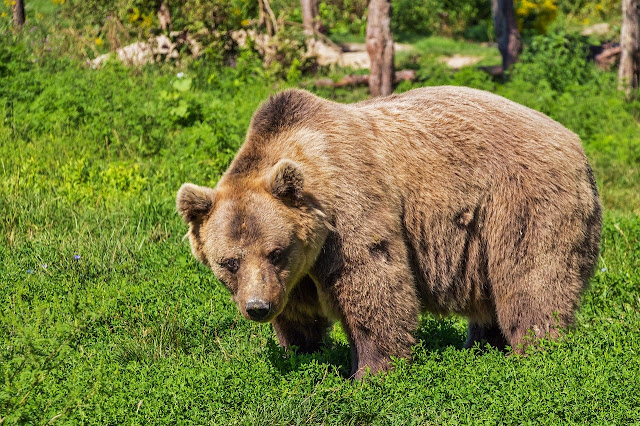
A Bear in forest

Yet in order to survive this long period of hibernation, the bears must previously build up their body weight by accumulating fat. 

Hibernation cycle is just another unique natural adaptation that allows the animals like the bear to survive during severe wintertime.


Do Raccoon's Hibernate in Winter? - hibernation for kids

What Is Hibernation?

In those parts of the world where some months of the year are very cold, mice and other small mammals hibernate.
This means that they go into an inactive, sleeplike state for the cold period and only fully wake up when the weather turns warm again.
Hibernating animals breathe much more slowly and their body temperature falls. 
They also need much less food. 
They build up a thick layer of fat during the warmer months and use it up very slowly during hibernation.
A dormouse can sleep in its nest for up to nine months in a year. It may wake up at intervals during this time to nibble at its store of nuts and berries.

Do Raccoon's Hibernate in Winter?

We might say that the raccoon's do not truly hibernate during the cold winter days, but they rather "hole up" for days, weeks, or even months, depending on the weather.
Raccoon hibernation is more like torpor, meaning their heartbeat, temperature, and body activities slow down, and they are only a little alert.
Raccoon's wake up from time to time during winter and sometimes even go out to hunt, they eat and go back to sleep.
During sleep their heartbeats and breathing slow down, but not as much as hibernator bodies do.