The day lasts 24 hours just because people wanted to share it like this. There is nothing in nature about hours, minutes and seconds. This division of time was made by man according to his wish.
But there is something in nature that happens in one day. Each time the Earth rotates once about its axis, a certain time passes, which we call a day. Using stars, scientists can accurately measure time. In observatories, a day begins when a star crosses the meridian and lasts until it crosses it again.
Since man divided the day into hours, minutes and seconds, we can say exactly how long a day lasts: 23 hours, 56 minutes, and 4.09 seconds. This is called a sidereal day. But since it would be difficult to use sidereal day in practical life, we take the day to last 24 hours, so we add a leap year to correct the difference.
In the old days, people thought that the day lasted from sunrise to sunset. The duration of the night was not counted. The Greeks reckoned that the day lasted from sunset to sunset and the Romans from midnight to midnight.
While the clocks had not yet been discovered, it was calculated that day and night lasted 12 hours each. Such a division was not practical, as the length of day and night varied between seasons. Today in most countries, the law stipulates that the day lasts 24 hours, from midnight to midnight, according to Roman times.
Mammals (Latin: Mammalia) include humans and all other animals that feed their young with milk. Most mammals are covered with fur and have specialized teeth that help them cut or chew food. Compared to other vertebrates (vertebrates have backbones), mammals have a more well-developed brain than other types of animals. Besides humans, mammals include some of the most famous members of the animal kingdom, such as cats, dogs, elephants, and whales.
Mammals breastfeed their young and this is their main feature. Mammalian young are born already formed. Before birth, the young develop in their mother's stomach. It feeds in the uterus via the placenta. The umbilical cord connects it to the placenta through which large blood vessels pass, brings food from the mother, and takes away the waste. The time it takes a young to grow up in a mother's body is called pregnancy and does not last equally for every mammal. When born, the young is a faithful image of his parents.
Do mammals have other characteristics?
So far, we have seen two: a young is born formed and sucks milk from his mother.
On top of that, most mammals, except for whales and dolphins, have skin covered with hair. The skin of bats, the only mammals that fly, is oily. Mammals have important glands, such as sweat, saliva, etc.
Mammals also excel at constant body temperature. They are called "warm-blooded." The temperature ranges from about 35° C to 39° C (for rabbits and cattle).
Other important features:
They need air and breathe (the mammals that live in the water from time to time come to the surface to take in the air).
Their central nervous system has been developed.
They have venous and arterial blood.
How are mammals different from other animals?
Mammals are warm-blooded. It is thanks to the heart. Blood helps to regulate heat. The mammalian heart consists of two atria and two chambers, completely separate. In most mammals, the brain is well developed. That's why we come across highly intelligent species, such as anthropoid apes and dolphins.
Mammals are also characterized by the specificity of their food-dependent teeth. Some change their teeth only once, in others their teeth grow without interruption.
All mammals have joints by which one or more bones bind to each other, creating one movable whole. The bones are firm and hard, which is why there can be very large animals. Many mammals have seven vertebrae each, which forms the spinal column. Sloths (family of South American mammals) and sea cows make an exception because they have more. Reptiles and birds have many more.
Where do mammals live?
Mammals exist in all parts of the world. Areas, where only certain species of mammals live, can't be accurately identified.
Most of mammals live on dry land, but others like moles and some kind of mice live in the ground. Representatives of individual ranks live in the water and they come to the ground to fetch the cubs or rest, but seek their food in the water. Whales don’t go on land since this would mean death for them and their young are born in water.
Other mammals like bats, for example, can fly.
Flying marsupials (flying squirrels, for example) have flying skin between the front and rear limbs thus can glide from one tree to another.
Once upon a time, lions and bears lived in Europe, and the tiger is not exactly a tropical animal. It could also be found in the north of the European part of Russia. Studying the habitat zones, we see that only the biggest obstacles prevented mammals from spreading everywhere. These are high mountains (like the Himalayas), oceans, deserts (like the Sahara) and climate.
How do mammals adapt to their environment?
If we analyze their classification, we will notice that this group of animals is very different from one another according to their diet. Some eat meat and other grass for example.
Mammals who feed on insects have pointed teeth so they can pierce the insect's armor.
Carnivores must have pointed molars in order to tear their victim's flesh. In contrast, herbivores have molars adapted for grazing.
The hedgehog feeds on insects. With its muzzle, it looks for
food under the leaves and moss. It gets out at night. Hedgehogs have spines
instead of fur. In addition, their body is wrapped in a single circular muscle. If
the hedgehog is threatened, this muscle shrinks and the animal becomes a spiny
ball. Even the fox will escape. In winter, hedgehogs sleep in sheltered places.
The heat of their body goes down several degrees above zero. If the weather
gets colder, they wake up to keep the warmth.
Some have long sticky tongues that serve them to catch ants and termites.
Nutrition that determines lifestyle requires adjusting the teeth, legs, and senses.
The Asian tiger, African lion and leopard, and American puma have many similarities, as do the Asian buffalo, the European bison and the Cape buffalo in Africa. This is because animals eat the same type of food and tend to adopt the same way.
Mammals living in water adapt otherwise. Their body is aerodynamic, and the limbs have turned into fins that house the limb skeleton. They are clumsy on earth because water is the environment in which they live. The glands in their skin are very important because they maintain body heat. Those mammals that live underwater can close their nostrils.
Whales have nostrils on the upper side of the head.
The rabbit is a rodent with big ears and a small tail. Its
anterior, upper and lower teeth are long and chiseled; they grow constantly
because they are spent while rabbit feeds itself. Rabbits live in underground
habitats. They go out at dusk to feed on roots and grass. They originate from
the Mediterranean area and are very fertile.
We will understand better what adaptation is by studying the same animal species under different climatic conditions. If we analyze for example three types of foxes: in the North, we find a polar fox with small ears; the foxes in Europe have bigger ears and the desert fox has very big ears. Why this different size? This is one way to regulate body temperature.
It should be known that two species of the same family, which feed differently, they also adapt differently.
The white rhino has a long neck since it grazes the grass. The black rhino has a shorter neck since it eats leaves from the bushes.
There is another adjustment to the color and patterns of the fur. It's hard to spot a tiger in nature because of its striped fur. It is similar to deer moving in the forest. Cubs (smaller in size) often have different fur than adults. Wild pigs also have striped fur, and many more examples can be found.
Geysers look a lot like volcanoes. These are springs of hot water that giggle at certain intervals. They are caused by high heat in the Earth's interior. They meet in places where there were volcanoes in the recent past.
Water from the surface penetrates the rocks through cracks representing natural gutters; it penetrates deep and begins to heat due to the Earth's internal heat. In the same way, together with steam, water erupts back to the surface and builds a wonderful fountain when leaving the earth.
Geysers occur in the form of a long jet of water gushing out of the ground. This movement is constantly renewed. There are geysers in particular in Iceland, New Zealand, USA. In Yellowstone National Park, the most attractive geysers are located.
The most famous one is called "Old Faithful" and its booster jets break out at one-hour intervals.
In Iceland, geysers are very useful: they are used to provide hot water for the central heating of the residents of the capital, Reykjavik. This warm water is the cheapest way to heat greenhouses: Thanks to this, vegetable production is developed in Iceland. Icelanders can even grow bananas despite the harsh climate.
Of all the animals we love, we probably love birds the most. They are often so wonderfully colorful and some sing beautifully. In addition, they are lively, agile and constantly on the move.
Which is the first bird?
The remains of the first bird were found in 1861 in limestone in Bavaria. The second skeleton was discovered in 1877 and almost a century later, in 1956, the third. Significantly, all three skeletons were found at a distance of 15 km.
All three skeletons are thought to have belonged to the same species of Archaeopteryx lithographica, in short archeopteryx. This animal lived 150 million years ago. A weak flyer, it shared characteristics with its dinosaur ancestors.
What are birds feathers made of??
If you look closely at the feather, you can see that its base is firm but very flexible at the top. It needs to be very mobile to be able to move in the air. In addition to this base, the feather consists of lateral fringes, "tiny silk twigs," hooked together to form a thick fringe on either side of the base.
If you observe a feather under a microscope, you will see small hooks hooked to the tassels in the same way that the tassels are connected to the base. All tassels have tiny hooks that fit into each other. In this way, the feather is supple and strong overall.
Do all birds build nests to lay eggs?
Bird pups can be divided into two specific groups. Those in the first group are born naked (with few exceptions), blind and completely helpless. All they can do is open their beaks, ask for food, and throw out their feces. They are completely addicted to their parents who constantly bring them food and heat them when it is cold. These birds are called nest builders or squats. All the birds that lay in our gardens are nest builders.
The second group consists of cubs that come into the world in the form of small fluffy balls, with large open eyes. As soon as they dry well, they are able to follow their parents and be sufficient to themselves, although parents initially look after them and let them know if they are in danger. These birds do not make nests. Chickens, for example, are birds that do not build nests.
Do all birds sit on their eggs??
No!
The cuckoo bird, for example, lays an egg in the nest of some singer bird and leaves it. The singer bird, lying on her own, also lies on the cuckoo's egg. Cuckoos are called bird parasites. There are various types of birds that lay their eggs in the nests of others.
Some birds lay their eggs in the sand and allow the pups to hatch with the help of sunlight. Or, they lay their eggs in the crevices of rocks sunlit all day.
Why do birds need to incubate their eggs?
Birds have to sit on their eggs to keep them warm. The warmth from the parent bird makes sure that the chicks inside develop properly. This is called 'incubation'.
It is commonly thought that a bird simply lies on an egg until it is opened. In fact, since feathers are insulators, most birds transmit their body heat to eggs through the surfaces of the incubator. These are places where there are no feathers, the skin is thinner, there is almost no fatty tissue, and the surface temperature is increased due to a large number of blood vessels. The bird, which begins to lay on its eggs, shakes the feathers off its breasts and settles itself so that the eggs are in contact with its naked breasts. Birds in which both males and females lie alternately on eggs, both have incubator surfaces.
How do baby birds get out of their eggs?
When a baby bird needs to break the shell, a difficult task awaits it: how to break it?
Fortunately, nature has endowed it with a "diamond" or "egg-tooth", a type of small pink protrusion located on the front of the upper jaw, which serves as a glass cutter and is used to make a crack on the shell. Then a lid is created that the chicken must push with all its strength to release itself from the egg, in a process called pipping.
For this action, the bird uses one strong muscle located on its nape that allows it to push off the shell.
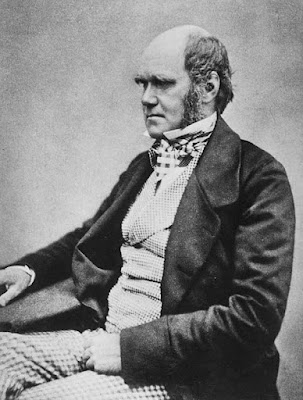
In 1831, Charles Darwin, a young student of geology and botany, seized the opportunity he had of participating, as a naturalist, in an expedition around the world to continue his research.
He visited the Galapagos Islands.
In each of these islands, far apart from one another, he observed certain species that did not appear in the other islands of the archipelago.
Charles Darwin discovered that nearby islands had similar but nonidentical species of finches. Moreover, he noted that each finch species was well-suited for its environment and role. When he returned to England, he read carefully his remarks from the journey he had carefully recorded in the logbook every day.
Charles Robert Darwin (12 February 1809 – 19 April 1882)
After many years of study and reflection, Darwin concluded that all of nature was changing. According to him, the strongest and most intelligent individuals are best able to adjust to changed environmental conditions and transfer to their offspring maintenance-friendly properties.
He described his impressions in the book "The Voyage of the Beagle".
Other of Darwin's very significant works are: "On the Origin of Species", "The Descent of Man", "The Expression of the Emotions in Man and Animals", "The Power of Movement in Plants", "The Formation of Vegetable Mould through the Action of Worms"
Charles Darwin is best known for his contributions to the science of evolution. His proposition that all species of life have descended over time from common ancestors is now widely accepted and considered a foundational concept in science.
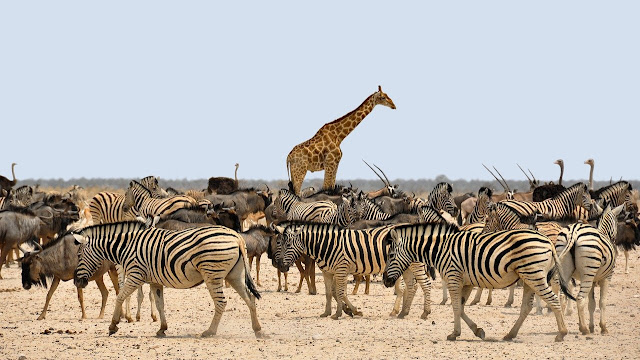
Many animals do not seem particularly strange to us when viewed. But because, as soon as we see the giraffe, we can see at first glance all its strangeness, probably because of its long neck.
The giraffe is without a doubt the tallest animal in the world. It is not uncommon for males to reach six meters in height (20 feet)! Its legs are extremely tall. And although her two pairs of legs are almost the same height, the front of her body is taller than the back and her back is lowered from neck to tail.
The giraffe's head is small and narrow, while the eyes, black and gentle, give this huge animal a noble expression. Giraffe's very elongated ears are sensitive to the slightest noise. The highly developed hearing and odor senses are very significant features and help the giraffe detect danger.
Another particular interest in giraffes is their tongue, whose length is usually about 45 centimeters. The giraffe uses it very deftly; it rushes even the smallest leaves of barbed bushes without being stabbed!
If you've seen a giraffe on the move, you've certainly noticed that her stride looks more like a trot. However, despite this, a giraffe in a gallop by running can reach speeds of 50 miles per hour and is able to outrun even the fastest horse!
Although a very benign and calm animal by nature, the giraffe is a very persistent fighter in defense. She hits hard with her legs, and her head kick is very powerful. In attacking the giraffe, the lions themselves behave with caution.
The diameter of a snake's body does not usually exceed the size of a fist, but it can still swallow a large chicken or rabbit. The Southeast Indian or nettle python is one of the largest snakes in the world, it can swallow wild boar and even deer.
This is possible because the snake has very stretchy jaws, the shape of which is different from that of a human.
Our lower jaw joints with the upper one are at ear height. For snakes, there is one extra bone that connects the ends of the two jaws with a double hinge, allowing them to be very separated from each other. The snake swallows its victim whole, covered with hair, feathers, shells, horns and more. Before the snake swallows its victim, it kills it first, whether using poison or more often, clamps it with her body until she chokes it.
Because snakes teeth are bent backward, the snake must swallow the whole victim because it cannot chew or retrieve it.
As the egg-laying age approaches, the female turtle emerges from the water. It is difficult to navigate the coast looking for a safe place. Using her legs, which are used as fins in the water, she digs the ground to make a nest. In a few hours, the turtle will lay 100 to 150 eggs. Completely exhausted, there is so much power left to overwhelm them.
After the eggs hatch, the turtle slowly returns to the sea. After a while, small turtles are born, which themselves have to cross a dangerous path to the sea where they can be killed by predators.
The remains of the first bird were found in 1861 in a limestone maid in Bavaria. The second skeleton was discovered in 1877 and almost a century later, in 1956, the third. Significantly, all three skeletons were found at a distance of 15 km.
All three skeletons are thought to have belonged to the same species of Archaeopteryx lithographica, in short archeopteryx. It is named after the limestone in which it was discovered, and sometimes its called by its German name Urvogel, which means ‘first bird’ or ‘original bird’. This animal lived 150 million years ago.
We all know there are Pygmy peoples whose average height is unusually short. But does some human group have considerably higher growth than the average, such as the Pygmy are lower than the average and do giants exist?
No giants do not exist and there is no proof they ever had.
The height of people is different in different parts of the world. Some people are low in growth like the Eskimos and some Indian tribes in South America. People of some tribes in the eastern part of Africa have an average height of 185 cm and above. But they are not giants. Actually, the giants seemed to exist only in fairy tales. In many parts of Europe and Asia, there are stories of giants who lived in ancient times, but there is no scientific evidence that such people have ever really existed. Still, we've all seen giants appearing in circuses and fairs.
How did some people become so tall?
Unfortunately, it's usually people who suffer from an abnormal appearance of their body. In most cases, it is a disorder of one of the most important human body glands, the pituitary gland.
The pituitary gland regulates the work and growth of many organs. Sometimes a tumor is created that increases this gland. As this is increased, the gland produces a larger number of hormones than it is normal. One of these hormones is the growth hormone which affects the size of the body and skeleton. When the release of this hormone is greater the bones continue to grow. Such a person can reach a height of 245 cm. This state is known as giant growth. But such a person is only divine because something irregularly happened to his/her body.
The Chinese are indeed remarkably fond of proverbs. They not only employ them in conversation, but they have a practice of adorning their reception rooms with these sententious bits of wisdom, inscribed on decorated scrolls or embroidered on rich crapes and brocades. They carve them on door-posts and pillars, and emblazon them on the walls and ceilings in gilt letters. The following are a few specimens of this sort of literature: -As a sneer at the use of unnecessary force to crush a contemptible enemy, they say: "He rides a fierce dog to catch a lame rabbit." -Similar to this is another, "To use a battle-ax to cut off a hen's head." They say of wicked associates: "To cherish a bad man is like nourishing a tiger; if not well-fed he will devour you."
Here are several others mingling wit with wisdom:
"To instigate a villain to do wrong is like teaching a monkey to climb trees;"
"To catch fish and throw away the net,"
"To climb a tree to catch a fish" is to talk much to no purpose;
"A superficial scholar is a sheep dressed in a tiger's skin;"
"A cuckoo in a magpie's nest," equivalent to saying, "he is enjoying another's labor without compensation;"
"If the blind lead the blind they will both fall into the pit;"
"A fair wind raises no storm;"
"Vast chasms can be filled, but the heart of man is never satisfied;"
"The body may be healed, but the mind is incurable;"
"He seeks the ass, and lo! he sits upon him;"
"He who looks at the sun is dazzled; he who hears the thunder is deafened." i. e., do not come too near the powerful;
"Prevention is better than cure;"
"Wine and good dinners make abundance of friends, but in adversity not one of them is to be found."
"Let every man sweep the snow from before his own door, and not trouble himself about the frost on his neighbor's tiles."
The following one is a gem of moral wisdom: "Only correct yourself on the same principle that you correct others, and excuse others on the same principles on which you excuse yourself."
"Better not be, than be nothing."
"One thread does not make a rope; one swallow does not make a summer."
"Sensuality is the chief of sins, filial duty the best of acts."
"The horse's back is not so safe us the buffalo's"—the former is used by the politician, the latter by the farmer.
"Too much lenity multiplies crime."
"If you love your son give him plenty of the rod; if you hate him cram him with dainties."
"He is my teacher who tells me my faults, he my enemy who speaks my virtues."
Having a wholesome dread of litigation, they say of one who goes to law, "He sues a flea to catch a bite."
Their equivalent for our "coming out at the little end of the horn" is, "The farther the rat creeps up (or into) the cow's horn, the narrower it grows."
The truth of their saying that "The fame of good deeds does not leave a man's door, but his evil acts are known a thousand miles off," is illustrated in our own daily papers every morning.
Finally, we close this list with a Chinese proverb which should be inscribed on the lintel of every door in Christendom: "The happy-hearted man carries joy for all the household." Excerpt from the book: Burroughs' Encyclopaedia of Astounding Facts and Useful Information, 1889 Author: Barkham Burroughs
That’s right—in a valley.
The lowest point on dry land is the shore of the Dead Sea, shared by Israel, Palestine and Jordan, 414 m (1,360 feet) below sea level.

 Image by Gerd Altmann from Pixabay