
How Does the Human Circulatory System Work? A Simple Guide to the Heart, Blood & Blood Vessels
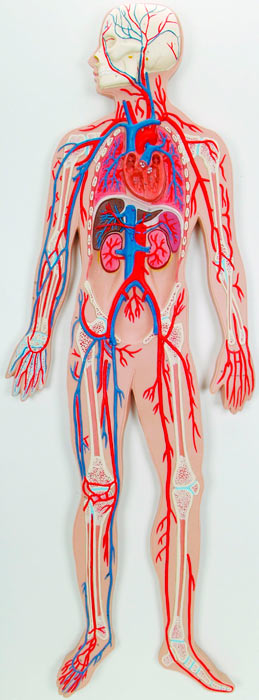
Every second of every day, blood is moving through your body.
It carries oxygen from your lungs to your cells, transports nutrients from your digestive system, carries hormones to different organs, and helps remove waste products. Behind this remarkable process is the human circulatory system—a continuous transportation network powered by your heart.
But how exactly does it work?
The circulatory system may seem complicated at first, but its basic job is surprisingly simple:
The heart pumps blood → blood travels through blood vessels → cells receive what they need → waste is collected → blood returns to the heart → the cycle begins again.

In this guide, we'll explain how the human circulatory system works, including the heart, blood, arteries, veins, capillaries, lungs, and the two major circulation pathways.
What Is the Human Circulatory System?
The circulatory system, also called the cardiovascular system, is the body's transportation system.
It consists mainly of three components:
- The heart — the muscular pump
- Blood — the fluid that transports substances
- Blood vessels — the tubes that carry blood around the body
Together, these components circulate blood continuously through the lungs and the rest of the body.
The circulatory system helps deliver:
- Oxygen
- Nutrients
- Hormones
- Water and electrolytes
- Immune cells
It also helps carry away:
- Carbon dioxide
- Metabolic waste
- Excess heat
So although the heart is the most recognizable part of the system, it doesn't work alone. The heart, blood, blood vessels, and lungs work together as a coordinated network.
What Are the Main Parts of the Circulatory System?
1. The Heart
The heart is a muscular organ that pumps blood throughout the body.
It is located in the chest, between the lungs, and is roughly the size of a person's clenched fist.
The heart has four chambers:
- Right atrium
- Right ventricle
- Left atrium
- Left ventricle
The right side mainly handles blood returning from the body, while the left side pumps oxygen-rich blood to the body.
Four major valves help control the direction of blood flow through the heart and prevent blood from flowing backward.
2. Blood
Blood is the fluid that travels through the circulatory system.
It contains several important components, including:
Red blood cells
Red blood cells contain hemoglobin, a protein that allows them to transport oxygen.
White blood cells
White blood cells are part of the immune system and help the body defend itself against infections and other threats.
Platelets
Platelets help blood clot when a blood vessel is damaged.
Plasma
Plasma is the liquid portion of blood. It carries water, proteins, hormones, nutrients, electrolytes, and waste products.
Together, these components allow blood to perform many different jobs throughout the body.
3. Blood Vessels
Blood vessels form an enormous network throughout the body.
There are three main types:
Arteries
Arteries carry blood away from the heart.
Most arteries carry oxygen-rich blood, although there is an important exception: the pulmonary arteries carry oxygen-poor blood from the heart to the lungs.
Arteries generally have thick, strong, elastic walls because blood leaves the heart under relatively high pressure.
Veins
Veins carry blood toward the heart.
Most veins carry oxygen-poor blood, but again there is an important exception: the pulmonary veins carry oxygen-rich blood from the lungs to the heart.
Many veins contain valves that help prevent blood from flowing backward.
Capillaries
Capillaries are tiny blood vessels that connect the smallest arteries and veins.
Their walls are extremely thin, allowing substances to move between the blood and surrounding tissues.
This is where much of the body's exchange of oxygen, carbon dioxide, nutrients, and waste products occurs.
How Does Blood Travel Through the Body?
Blood moves through the circulatory system in a continuous loop.
The circulation can be divided into two major pathways:
Pulmonary circulation — between the heart and lungs
Systemic circulation — between the heart and the rest of the body
Let's follow a single drop of blood through the entire journey.
Step 1: Blood Returns From the Body
After delivering oxygen to body tissues, blood has less oxygen and more carbon dioxide.
This oxygen-poor blood travels through veins toward the heart.
Large veins called the superior vena cava and inferior vena cava return blood to the heart.
The blood enters the right atrium.
Step 2: Blood Moves Into the Right Ventricle
The right atrium contracts and pushes blood through a valve into the right ventricle.
The right ventricle is the lower chamber on the right side of the heart.
When it contracts, it pushes the blood toward the lungs.
Step 3: The Heart Sends Blood to the Lungs
The right ventricle pumps oxygen-poor blood through the pulmonary arteries toward the lungs.
This is an important detail:
Pulmonary arteries carry oxygen-poor blood.
In the lungs, blood travels through tiny vessels surrounding the air sacs called alveoli.
Here, gas exchange takes place.
Carbon dioxide moves from the blood into the lungs to be exhaled, while oxygen moves from the lungs into the blood.
The blood is now oxygen-rich.
Step 4: Oxygen-Rich Blood Returns to the Heart
After picking up oxygen in the lungs, blood travels back to the heart through the pulmonary veins.
It enters the left atrium.
This is another useful exception to remember:
Pulmonary veins carry oxygen-rich blood.
Step 5: Blood Moves Into the Left Ventricle
The left atrium contracts and moves blood into the left ventricle.
The left ventricle is particularly muscular because it has to pump blood throughout the entire body.
Step 6: The Heart Pumps Blood to the Body
When the left ventricle contracts, it pushes oxygen-rich blood into the aorta, the body's largest artery.
From the aorta, blood travels through increasingly smaller arteries and eventually reaches capillaries throughout the body.
At the capillaries, oxygen and nutrients are delivered to cells.
Carbon dioxide and other waste products enter the blood.
The blood then travels through veins back toward the heart.
And the cycle starts again.
The Complete Blood-Flow Pathway
The entire journey can be simplified like this:
Body → venae cavae → right atrium → right ventricle → pulmonary arteries → lungs → pulmonary veins → left atrium → left ventricle → aorta → body
You can think of it as a continuous loop:
BODY → HEART → LUNGS → HEART → BODY
What Is Pulmonary Circulation?
Pulmonary circulation is the movement of blood between the heart and lungs.
Its main purpose is to exchange gases.
The pathway is:
Right ventricle → pulmonary arteries → lungs → pulmonary veins → left atrium
In the lungs:
Carbon dioxide leaves the blood → oxygen enters the blood.
The oxygen-rich blood then returns to the heart and is ready to be pumped throughout the body.
What Is Systemic Circulation?
Systemic circulation is the movement of blood between the heart and the rest of the body.
It begins when the left ventricle pumps oxygen-rich blood into the aorta.
The blood travels through arteries and capillaries, where oxygen and nutrients are delivered to tissues.
The blood then returns through veins to the right atrium.
The pathway is:
Left ventricle → aorta → arteries → capillaries → veins → right atrium
Together, pulmonary and systemic circulation keep blood moving continuously.
Why Does the Heart Beat?
The heart needs to contract and relax rhythmically to keep blood moving.
A heartbeat has two basic phases:
Diastole
The heart muscle relaxes and the chambers fill with blood.
Systole
The heart muscle contracts and pumps blood out of the chambers.
The heart's electrical system coordinates these contractions.
A specialized group of cells called the sinoatrial (SA) node normally initiates the electrical signal that starts each heartbeat.
This is why the SA node is often described as the heart's natural pacemaker.
Why Doesn't Blood Flow Backward?
Blood generally needs to move in one direction.
The heart's four valves help make that happen.
They open when blood needs to move forward and close to help prevent backward flow.
The valves work together with the pressure changes produced by the heart's contractions.
This allows blood to travel efficiently from:
Body → heart → lungs → heart → body
How Does Blood Know Where to Go?
Blood doesn't make decisions about where to travel.
Instead, pressure differences and the structure of the circulatory system guide its movement.
When the heart contracts, it creates pressure that pushes blood into the arteries.
As arteries branch into smaller vessels, blood reaches different tissues throughout the body.
At the capillaries, exchange occurs.
Blood then enters small veins and larger veins, eventually returning to the heart.
The circulatory system therefore works as a connected network rather than as separate routes chosen by individual blood cells.
What Does the Circulatory System Transport?
The circulatory system carries many substances essential for keeping cells alive.
Oxygen
Blood carries oxygen from the lungs to tissues.
Nutrients
After food is digested, nutrients can enter the bloodstream and be transported to cells.
Carbon dioxide
Cells produce carbon dioxide as a waste product. Blood carries it to the lungs, where it can be exhaled.
Hormones
Hormones produced by organs and glands can travel through the blood to target tissues.
Waste products
Blood transports various waste products to organs such as the kidneys and liver for processing or removal.
Immune cells
White blood cells travel through the bloodstream as part of the body's defense system.
How Fast Does Blood Circulate?
Blood is constantly moving, but the time required for a complete circulation varies depending on factors such as activity level, heart rate, circulation route, and individual physiology.
During exercise, for example, the heart generally pumps more blood per minute because working muscles need more oxygen and nutrients.
The circulatory system can adjust blood flow to meet changing demands throughout the body.
Why Does the Heart Beat Faster During Exercise?
When you exercise, your muscles require more oxygen and energy.
They also produce more carbon dioxide and metabolic waste.
To meet these changing demands, the cardiovascular system responds by increasing blood flow.
Your heart generally beats faster and pumps more blood with each minute of activity.
Blood vessels supplying active tissues can also change their diameter, helping adjust blood flow where it is needed.
This is one reason regular physical activity is important for cardiovascular health.
What Is the Difference Between Oxygen-Rich and Oxygen-Poor Blood?
Oxygen-rich blood has a relatively high concentration of oxygen after passing through the lungs.
It travels from the lungs to the left side of the heart and then to the body's tissues.
Oxygen-poor blood has delivered much of its oxygen to tissues and carries more carbon dioxide.
It returns to the right side of the heart and is then pumped to the lungs.
A useful simplified pattern is:
Blue side: body → lungs
Red side: lungs → body
However, blood isn't literally blue inside veins. The blue and red colors commonly used in diagrams are visual conventions for showing differences in oxygen content.
Why Are Capillaries So Important?
Capillaries may be tiny, but they are essential to circulation.
Their walls are only about one cell thick, allowing materials to move between the bloodstream and surrounding tissues.
At capillaries:
Oxygen → moves into tissues
Nutrients → move into tissues
Carbon dioxide → enters blood
Waste products → enter blood
This exchange connects the circulatory system directly with the body's cells.
What Happens If Circulation Stops?
The body's cells depend on a continuous supply of oxygen and nutrients.
If blood circulation stops, oxygen delivery to tissues is interrupted. The brain and other organs are particularly dependent on continuous blood flow.
This is why the heart's pumping action and normal circulation are essential to life.
How Can You Keep Your Circulatory System Healthy?
Many everyday habits support cardiovascular health.
These include:
- Getting regular physical activity
- Eating a balanced diet
- Avoiding tobacco and smoking
- Maintaining a healthy body weight
- Getting adequate sleep
- Managing stress
- Keeping blood pressure and cholesterol at healthy levels
- Following medical advice when you have cardiovascular risk factors
Your circulatory system works around the clock, so taking care of cardiovascular health is important throughout life.
Fascinating Facts About the Circulatory System
❤️ Your heart works continuously
Your heart contracts and relaxes thousands of times each day to keep blood circulating.
🩸 Blood is more than red blood cells
Blood contains red blood cells, white blood cells, platelets, and plasma, each with different functions.
🫀 The left ventricle is especially muscular
It needs to generate enough pressure to send blood through the systemic circulation and throughout the body.
🫁 Your lungs are part of the circulation pathway
The lungs aren't just organs for breathing. They are where blood picks up oxygen and releases carbon dioxide.
🔄 Circulation is a continuous loop
There is no "start" or "finish" to normal circulation. Blood continuously moves through the heart, lungs, and body.
A Simple Way to Remember the Circulatory System
Think of the circulatory system as a delivery and recycling network.
The heart = pump
Blood = delivery vehicle
Arteries = roads going away from the heart
Veins = roads returning to the heart
Capillaries = delivery points
Lungs = oxygen exchange station
The heart keeps the system moving, blood carries the cargo, and blood vessels provide the transportation network.
Human Circulatory System: Quick Summary
| Part | Main job |
|---|---|
| Heart | Pumps blood |
| Blood | Transports oxygen, nutrients, hormones, and waste |
| Arteries | Carry blood away from the heart |
| Veins | Carry blood toward the heart |
| Capillaries | Exchange substances with tissues |
| Lungs | Add oxygen to blood and remove carbon dioxide |
| Right side of heart | Sends oxygen-poor blood to the lungs |
| Left side of heart | Sends oxygen-rich blood to the body |
The Bottom Line
So, how does the human circulatory system work?
The heart continuously pumps blood through an enormous network of blood vessels. The right side of the heart sends oxygen-poor blood to the lungs, where it releases carbon dioxide and picks up oxygen. The left side then pumps oxygen-rich blood to the rest of the body, where oxygen and nutrients are delivered to cells.
Afterward, the blood collects carbon dioxide and other waste products and returns to the heart, beginning the cycle again.
In its simplest form:
❤️ Heart pumps → 🩸 blood travels → 🫁 lungs add oxygen → 🧍 body receives oxygen → 🔄 blood returns → ❤️ repeat
This nonstop circulation helps every cell in your body receive the resources it needs to function.
Your circulatory system is one of the body's greatest transportation networks—and your heart is the pump that keeps it moving.